
Black Obsidian
The Mirror Stone
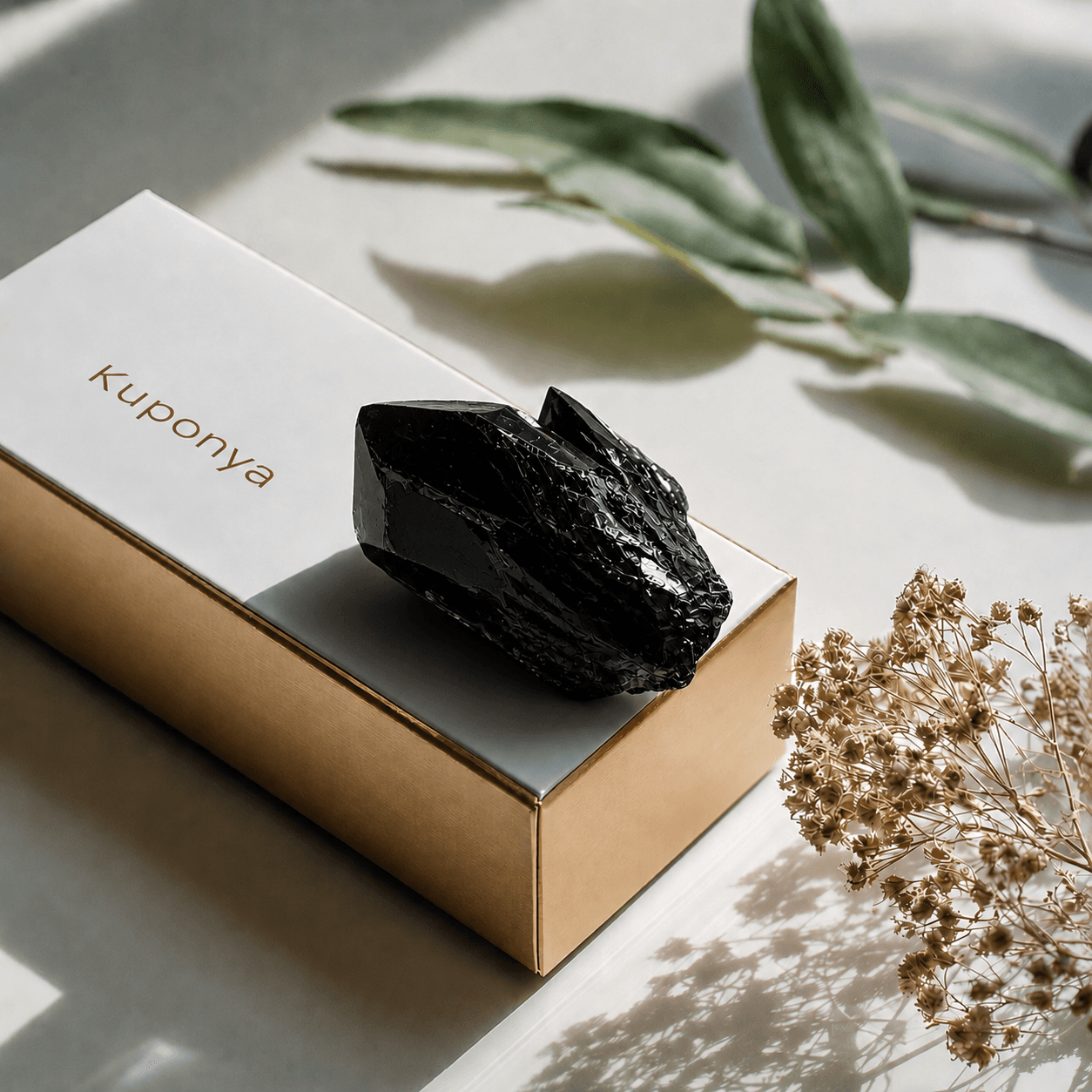
Pick up a piece of Obsidian, and you are holding one of the very first things human hands ever learned to shape, and the place they first learned to shape it was Africa. Along the East African Rift, our ancestors were working this black volcanic glass about 2 million years ago. The oldest known toolmaking site on earth sits in the Ethiopian highlands, where people knapped Obsidian roughly 1.2 million years ago. Long before writing, before cities, before anyone thought to call it a crystal, there was Obsidian, and African hands were turning it into the sharpest edge in the world.
Wherever people found it after that (and it forms only where volcanoes meet the world, so never everywhere), they did two things with it that never stopped. They made blades because nothing else cut so cleanly. And when they polished it, they made mirrors, and looked into the dark to see what couldn’t otherwise be seen. The Aztecs called it the talking stone and made it the emblem of Tezcatlipoca, the “smoking mirror,” the god of fate, into whose black glass priests gazed to read the truth of a matter.
You probably know Obsidian today as a protection stone. That’s true. But the older, deeper story, told on three continents by people who never met, is this: for as long as there have been humans, this is the stone we turn to when we need to see what is hidden, including what is hidden in ourselves.
Quick reference
- Also known as
- Volcanic glass · the Smoking Mirror · “the talking stone”
- Mineral
- Volcanic glass (not a true crystal) · Mohs ~5–5.5
- Family
- Black, snowflake, rainbow, mahogany, Apache tears
- Key sources
- Ethiopia & East Africa, Mexico, USA, Armenia, Türkiye, Island Southeast Asia, Melanesia, Japan, Iceland
- Tradition
- Of the Earth · the Root · protection, truth & grounding
- Care
- It’s glass, so a quick rinse is fine; no salt soaks; mind the edges
- Best known for
- Protection, truth & shadow work, grounding
- KUPONYA pairing
- Myrrh
Older than its name
That African stone became one of the first things humans ever carried far enough to trade. It moved north into Egypt, which had none of its own, a sacred black glass passing hand to hand down the Nile from the Ethiopian highlands. A thousand years later, it became one of the great exports of Aksum, the Black African empire, the third-century philosopher Mani named beside Rome, Persia, and China as one of the four great powers of the world, and whose Red Sea merchants carried this stone to three continents.
The name we use came last. Obsidian is Latin, after a Roman called Obsius who, according to the encyclopedist Pliny, came across the stone in Ethiopia. Europe’s own word for it records the “discovery” of something Africans had already worked for a million years. Europe’s most famous piece of Obsidian carries the same history: the black scrying Mirror John Dee used to read the future for Queen Elizabeth I is a Mexica sacred object, taken from Mesoamerica after the Spanish invasion. It is in the British Museum today and has never been returned.
What it’s really for
Obsidian is the Mirror. And a mirror doesn’t show you the room. It shows you yourself.
That is Obsidian’s real gift, and why it has a reputation for being intense: it brings what’s under the surface up to where you can see it. The thing you’ve been avoiding, the pattern you keep repeating, the feeling you’ve been talking yourself out of. This is not a gentle stone, and it doesn’t pretend to be. It works quickly and goes deep.
Which is exactly why its other two gifts matter so much. Obsidian is also deeply protective and deeply grounding, and those aren’t separate from the mirror; they’re what make the mirror bearable. The protection holds a boundary around you so you’re not taking on everyone else’s darkness while you look at your own. The grounding keeps your feet on the earth while you do the harder work. So it’s all three at once: it shields you, it grounds you, and it holds up the mirror.
What people turn to black Obsidian for
Protection
A shield. Long used as a stone of protection, a guard against negativity, and against what older traditions call psychic attack.
Keeping others’ weight off you. In crystal lore, it’s considered a very personal stone, often kept by one person and carried to stop others from offloading their problems onto you.
Truth & shadow work
The Mirror. Reflecting your true self back, the parts you’re proud of and the parts you’d rather not own.
Breaking illusion. Cutting through self-deception and the stories we tell ourselves, and surfacing patterns so you can finally deal with them honestly.
Protection and the mirror are what most people meet first. There is a reason I keep this stone closer than any other, and it comes from 25 years of work I have not yet described. I carry Obsidian against my body every day. Why, and what it does for me, is on the other side.
Two ways to begin
When you know it’ll be heavy. Slip a piece in your pocket before the room, the meeting, or the person you already know will take something out of you. A small, solid reminder that their weight isn’t yours to carry home.
The reset. After a hard day or a hard conversation, pass it through your hands and name the one thing you’re setting down. Then go and clear it.
A note on care: Obsidian is glass, so a quick rinse is fine, but skip long salt soaks and mind the edges; a fresh break can be sharp. Full care is below.
Free sign-up unlocks the rest of the story.
Free sign-up unlocks the rest: the grounding and clearing practices, the deeper spiritual side, the Myrrh pairing, how to care for it, how I carry it against my body every day, and why it’s the stone I trust most.